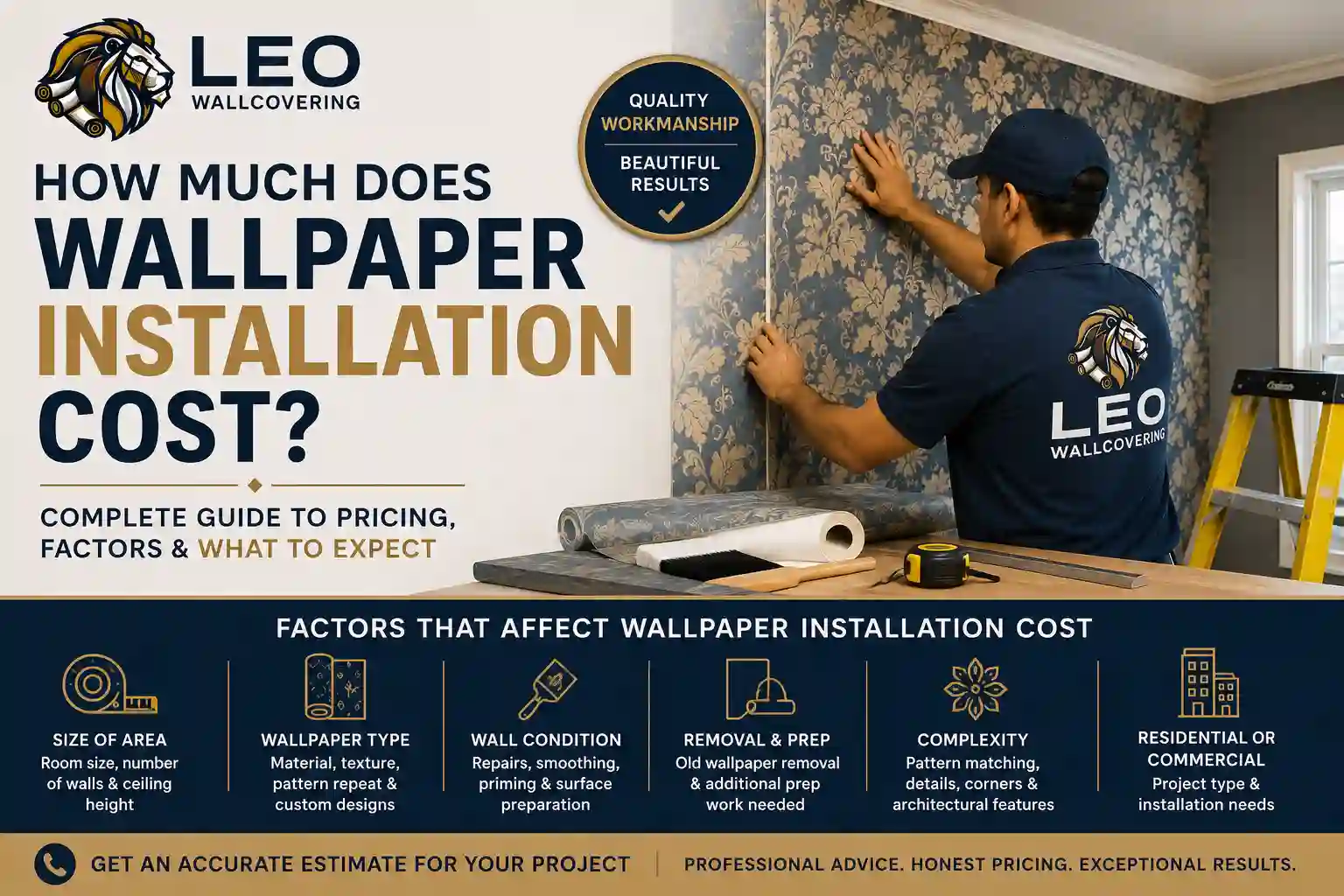


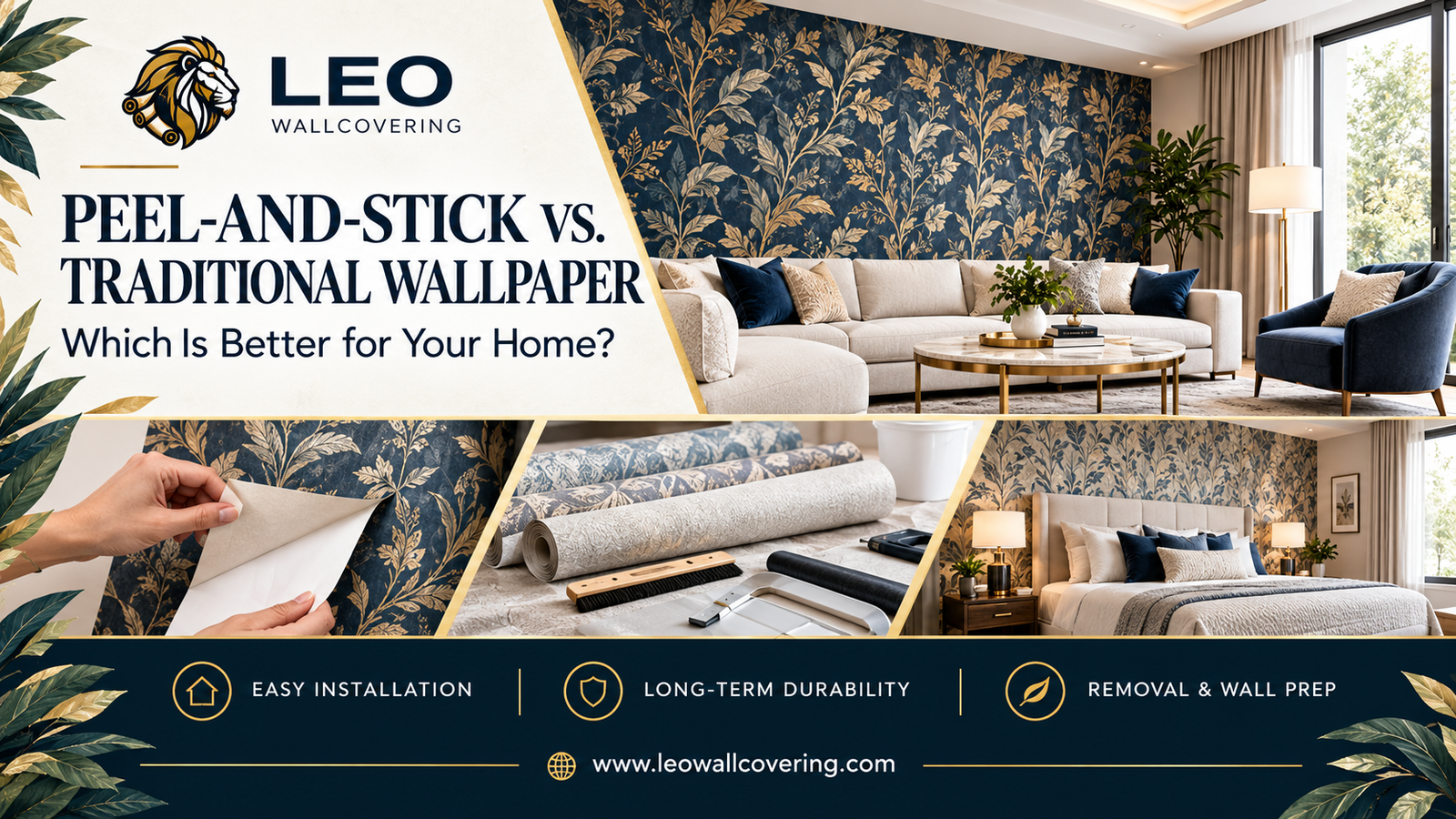
Choosing the right wallpaper can make a significant difference in the appearance, comfort, and style of your interior. Whether you want to create a modern accent wall, refresh a bedroom, or give your living room a more sophisticated look, wallpaper offers a wide range of colors, patterns, and textures.
However, one important decision comes before installation: should you choose peel-and-stick wallpaper or traditional wallpaper?
Both options can transform your walls, but they differ in installation methods, adhesive systems, surface requirements, design availability, and removal characteristics. Peel-and-stick wallpaper appeals to homeowners looking for a relatively straightforward decorating option, while traditional wallpaper offers a broad selection of materials and finishes that may be better suited to certain long-term projects.
Understanding the differences can help you select a wallcovering that fits your budget, interior design goals, and maintenance expectations.
At Leo Wallcovering, homeowners and commercial property owners can explore professional wallpaper installation options for different interior spaces. This guide compares peel-and-stick vs. traditional wallpaper so you can make an informed decision for your next project.
What Is Peel-and-Stick Wallpaper?
Peel-and-stick wallpaper is a self-adhesive wallcovering with a backing that protects its adhesive layer. During installation, the backing is gradually removed while the wallpaper is positioned against the wall.
Unlike many traditional wallpaper products, peel-and-stick wallpaper does not require separately applied wallpaper paste. This can simplify the installation process, particularly for smaller decorative projects.
It is available in a variety of colors, printed designs, geometric patterns, faux textures, and other decorative styles. Depending on the manufacturer, some products are marketed as removable or repositionable.
Benefits of Peel-and-Stick Wallpaper
1. No separately applied wallpaper paste
The adhesive is already attached to the wallpaper, so you generally do not need to prepare and apply a separate paste. However, the manufacturer’s installation instructions must still be followed.
2. Convenient for smaller projects
Peel-and-stick wallpaper can be suitable for accent walls, selected bedroom walls, rental-friendly decorating projects, and other applications where the product is compatible with the surface.
3. Potentially simpler removal
Some peel-and-stick products can be removed more easily than certain traditional wallpaper installations. The actual result depends on the adhesive, product quality, length of installation, paint condition, and wall surface.
4. Flexible decorative options
Many products feature contemporary patterns, bold colors, botanical prints, and minimalist designs that work well in modern interiors.
Disadvantages of Peel-and-Stick Wallpaper
Peel-and-stick wallpaper is not suitable for every wall or environment.
- The adhesive may not bond reliably to rough, dusty, textured, or unsuitable painted surfaces.
- Bubbles, wrinkles, and misaligned panels can affect the finished appearance.
- Adhesion may weaken in certain temperature or humidity conditions, depending on the product.
- Repositioning is not always easy, particularly with larger panels or products that are not designed to be repositioned.
- Some designs have fewer material and texture options than the broader traditional wallpaper market.
For the best results, check the product specifications and confirm that the wall surface is suitable before installation.
What Is Traditional Wallpaper?
Traditional wallpaper is a wallcovering installed using an adhesive system specified by the manufacturer. Depending on the product, the adhesive may be applied to the wallpaper, applied directly to the wall, or supplied as part of a particular installation system.
Traditional wallpaper includes a wide variety of materials, such as non-woven wallpaper, vinyl wallpaper, paper-based products, textured finishes, and specialty wallcoverings.
This variety makes traditional wallpaper suitable for many interior design projects, from subtle bedroom finishes to detailed feature walls and commercial interiors.
Benefits of Traditional Wallpaper
1. A wide selection of materials and finishes
Traditional wallpaper is available in numerous textures, patterns, colors, and surface finishes. Options may include natural-looking textures, elegant patterns, durable vinyl surfaces, and premium decorative designs.
2. Suitable options for larger projects
Depending on the material and installation requirements, traditional wallpaper can be a practical choice for covering multiple walls or completing a coordinated interior design.
3. Professional installation options
An experienced installer can help with wall preparation, layout planning, pattern matching, seam placement, and the appropriate adhesive for the selected product.
4. Specialty design possibilities
Some traditional wallpaper collections include premium textures, detailed patterns, and specialty wallcoverings that require more careful handling than standard self-adhesive products.
Disadvantages of Traditional Wallpaper
Traditional wallpaper also has considerations that homeowners should understand.
- Some products require additional adhesive and installation supplies.
- Installation may involve more preparation and technical steps.
- Removing certain products can be time-consuming, particularly when the adhesive is difficult to release.
- Intricate patterns may require additional material for matching.
- Improper surface preparation or installation can cause bubbles, seam problems, or adhesion issues.
Traditional wallpaper is not automatically more durable or more difficult to remove than peel-and-stick wallpaper. The result depends on the specific product, adhesive, wall condition, and installation quality.
Peel-and-Stick vs. Traditional Wallpaper: Key Differences
The best choice depends on your priorities. The following comparison highlights the main differences between the two options.
| Feature | Peel-and-stick wallpaper | Traditional wallpaper |
| Adhesive | Pre-applied self-adhesive backing | Product-specific adhesive system |
| Installation | Can be straightforward for suitable surfaces | Often involves additional installation steps |
| Wall preparation | Requires a clean, smooth, compatible surface | Also requires suitable preparation and may need priming |
| Design selection | Varies by manufacturer and collection | Broad selection across many materials and finishes |
| DIY suitability | Often suitable for smaller, simpler projects | Depends on material, pattern, and installation method |
| Removal | May be easier with removable products | Varies; some products are designed for easier removal |
| Repositioning | Depends on the product | Depends on the adhesive and product instructions |
| Larger installations | Possible when the product is appropriate | Many options are available for larger projects |
| Material cost | Varies by quality and brand | Varies by material, brand, and finish |
| Professional installation | Useful for precise alignment and complex layouts | Particularly helpful for specialty materials and detailed patterns |
Neither option is universally better. The right decision depends on the specific wallpaper and the conditions of the room.
Which Wallpaper Is More Affordable?
The cost of wallpaper depends on more than whether it is peel-and-stick or traditional. Material quality, wall dimensions, pattern complexity, surface preparation, and installation labor can all affect the total project budget.
Peel-and-Stick Wallpaper Cost
Peel-and-stick wallpaper may reduce certain installation expenses because it does not require a separately applied wallpaper paste. For a small, straightforward accent wall, this can make it an appealing option for DIY decorating.
However, self-adhesive wallpaper can vary significantly in price. Premium designs, thicker materials, large-format panels, and specialty finishes may cost more than basic products.
Additional costs may also arise if the wall needs smoothing, cleaning, repairs, or repainting before installation.
Traditional Wallpaper Cost
Traditional wallpaper prices vary according to the material, design, brand, and installation requirements.
The overall budget may include wallpaper rolls, adhesive, primer, wall repairs, labor, and additional material for pattern matching. Professional installation can be especially valuable for complex patterns, large walls, and specialty wallcoverings.
When comparing estimates, make sure you compare the same scope of work. One quote may cover labor only, while another may include materials and preparation.
For professional installation options, explore Leo Wallcovering’s wallpaper installation services.
Which Type of Wallpaper Is Easier to Install?
Peel-and-stick wallpaper is often considered easier for DIY installation because it comes with a pre-applied adhesive layer. However, the actual difficulty depends on the wall, the product, and the size of the project.
Installing Peel-and-Stick Wallpaper
A typical installation involves measuring the wall, preparing the surface, aligning the first panel, gradually removing the backing, and smoothing the wallpaper as it is applied.
The first panel is particularly important because its alignment affects the remaining panels. Even a small deviation can become more noticeable as the installation continues.
Common challenges include trapped air, uneven alignment, stretching, and difficulty matching patterns across adjacent panels.
Installing Traditional Wallpaper
Traditional wallpaper installation may involve measuring and cutting the material, preparing the adhesive according to the manufacturer’s instructions, positioning each strip, matching the pattern, smoothing the surface, and trimming the edges.
Different wallpaper types require different installation methods. Some products use a paste-the-wall approach, while others require adhesive applied to the wallpaper.
A professional installer can determine the appropriate technique for the material and surface.
If your project includes delicate materials or intricate patterns, professional wallpaper hanging services can help achieve a more consistent finish.
Which Wallpaper Lasts Longer?
Durability depends on the wallpaper’s construction, adhesive, installation quality, room conditions, and maintenance.
It is not accurate to assume that every traditional wallpaper lasts longer than peel-and-stick wallpaper or that all self-adhesive products are temporary.
Peel-and-Stick Wallpaper Durability
The lifespan of peel-and-stick wallpaper depends on the manufacturer’s specifications and the conditions in which it is installed.
Adhesion problems may occur when the wall is dusty, textured, damp, or coated with an incompatible finish. Environmental conditions can also affect performance.
For this reason, review the manufacturer’s guidance regarding surface compatibility, temperature, humidity, and cleaning.
Traditional Wallpaper Durability
Traditional wallpaper also varies in durability. Certain vinyl wallcoverings are designed for environments where cleanability matters, while delicate paper-based or natural-texture materials may require more careful handling.
Correct adhesive selection, wall preparation, and installation technique help support the finished result.
For either option, follow the product’s maintenance instructions and address moisture or wall damage before installing the wallpaper.
Which Wallpaper Is Easier to Remove?
Removal is an important consideration if you plan to change your interior design in the future.
However, removability depends on the particular product and the way it was installed.
Removing Peel-and-Stick Wallpaper
Some peel-and-stick wallpapers are designed to be removed by gradually lifting an edge and pulling the material away from the wall according to the manufacturer’s instructions.
Even removable wallpaper can damage weak paint, poorly bonded finishes, or fragile drywall paper. Adhesive residue may also remain.
Test an inconspicuous area when permitted by the manufacturer, and avoid pulling aggressively if the surface begins to lift.
Removing Traditional Wallpaper
Traditional wallpaper removal methods vary by product. Some modern wallcoverings are designed to separate from the wall more easily, while others require a suitable removal solution or additional work to soften and release the adhesive.
After removal, the wall may need adhesive residue cleaned off, damaged areas repaired, and a primer applied before new wallpaper or paint.
If you are replacing an existing wallcovering, review the wall preparation service to understand why the condition of the surface matters before installing a new finish.
Which Wallpaper Is Better for Different Rooms?
The best wallpaper for your project depends on the room’s purpose, the wall surface, and the appearance you want to achieve.
Living Rooms
For living rooms, both peel-and-stick and traditional wallpaper can work well.
Peel-and-stick wallpaper may suit a smaller decorative feature, while traditional wallpaper offers a wide range of textures and patterns for larger design schemes.
Consider the room’s natural light, furniture, wall dimensions, and existing color palette before choosing a design.
Bedrooms
Bedrooms are popular locations for wallpaper accent walls, especially behind a bed.
Peel-and-stick wallpaper can be suitable for a simple design update, provided the surface and product are compatible. Traditional wallpaper may be preferable when you want a specific texture, premium finish, or coordinated design across several walls.
Rental Properties
Peel-and-stick wallpaper may be attractive for renters who want a temporary decorative change. However, the term “removable” does not guarantee damage-free removal.
Before installation, review your rental agreement, ask the property owner when necessary, and follow the wallpaper manufacturer’s guidance.
Kitchens and Bathrooms
Moisture and temperature conditions require special attention in kitchens and bathrooms.
Not every wallpaper is suitable for damp areas, and ordinary wallpaper should not be assumed to be waterproof. Product specifications, ventilation, surface conditions, and proximity to direct water exposure all matter.
Choose a product specifically recommended for the intended environment, and avoid installing it where the manufacturer prohibits use.
Commercial Interiors
Offices, reception areas, retail spaces, and hospitality interiors may benefit from wallcoverings selected for their design, maintenance requirements, and expected use.
The best material depends on the environment and the manufacturer’s performance specifications.
For business properties, explore commercial wallpaper installation to learn more about wallcovering solutions for professional spaces.
Is Professional Wallpaper Installation Worth It?
DIY installation can work for smaller, straightforward projects, particularly when the wallpaper is designed for easy application and the walls are already in suitable condition.
However, professional installation may be worth considering when the project involves expensive wallpaper, large walls, complicated patterns, high ceilings, or specialty materials.
An experienced wallpaper installer can help with:
- Measuring wall surfaces and estimating material quantities
- Assessing wall conditions before installation
- Recommending suitable surface preparation
- Planning pattern alignment and seam placement
- Applying the appropriate installation technique
- Reducing the risk of wasted material and visible installation mistakes
Professional installation does not guarantee that every issue can be avoided, but careful planning and suitable techniques can help achieve a consistent result.
For homeowners considering a more detailed interior design, accent wall installation can be a useful starting point.
How to Choose the Right Wallpaper for Your Walls
Before purchasing wallpaper, consider these practical questions.
What is your budget? Compare the total material and installation cost rather than the price of a single roll.
How long do you want the design to remain? Consider whether the wallpaper is intended for a temporary update or a longer-term interior design.
What condition are the walls in? Textured, damaged, dusty, or unsuitable surfaces may need attention before either wallpaper type can be installed.
How complex is the pattern? Large repeats, geometric designs, and murals may require more careful planning.
Will the room experience moisture or heavy use? Check that the product is suitable for the environment and can be maintained as required.
Are you comfortable with DIY installation? A small wall may be manageable, while a large or complicated project may benefit from professional assistance.
Taking the time to answer these questions can help you select a wallcovering that suits your design preferences and practical needs.
Frequently Asked Questions
Is peel-and-stick wallpaper better than traditional wallpaper?
Peel-and-stick wallpaper may be better for smaller decorative projects and certain temporary applications. Traditional wallpaper may be a better choice when you need a particular material, texture, or finish. The right option depends on the product, wall condition, and project requirements.
Can peel-and-stick wallpaper damage walls?
Yes, it can. Removal may lift weak paint, damage fragile drywall surfaces, or leave adhesive residue. Even products marketed as removable may cause damage if the wall finish is unsuitable or the manufacturer’s removal instructions are not followed.
Can I install peel-and-stick wallpaper over textured walls?
Some products may tolerate limited texture, but many require a smooth, clean surface for reliable adhesion and a consistent appearance. Check the manufacturer’s instructions before installing wallpaper over textured paint or uneven walls.
Is traditional wallpaper more expensive?
Not always. Both traditional and peel-and-stick wallpaper are available at different price points. The final project cost depends on material selection, installation labor, wall preparation, and project size.
Can traditional wallpaper be removed?
Yes, but the removal process varies by product and adhesive. Some wallcoverings are designed for easier removal, while others may require additional work and surface repairs.
Can wallpaper be installed without a professional?
Yes. Some wallpaper products are designed for DIY installation. However, large walls, intricate patterns, delicate materials, and difficult surfaces may be more challenging and can benefit from professional installation.
Does wallpaper require wall primer?
Depending on the product and wall condition, a suitable wallpaper primer or other surface treatment may be recommended. Follow the wallpaper manufacturer’s installation instructions and prepare the surface appropriately.
Which wallpaper is best for an accent wall?
Both options can work. Choose based on the desired appearance, wall condition, product compatibility, and installation requirements. Traditional wallpaper provides a broad range of specialty finishes, while peel-and-stick wallpaper can be convenient for certain decorative projects.
Choose the Right Wallpaper for Your Next Project
When comparing peel-and-stick vs. traditional wallpaper, there is no single option that is best for every home. Peel-and-stick wallpaper offers a convenient self-adhesive format for suitable surfaces, while traditional wallpaper provides a wide selection of materials, patterns, and finishes for different interior design goals.
Before making a decision, consider your budget, wall condition, preferred design, installation requirements, and plans for future removal.
If you are planning a wallpaper project in Ontario, California, or the surrounding Inland Empire area, visit Leo Wallcovering to explore wallcovering services and contact the team to discuss your project.
With the right material, proper surface preparation, and an appropriate installation method, you can create an interior that reflects your style and meets your practical needs.