


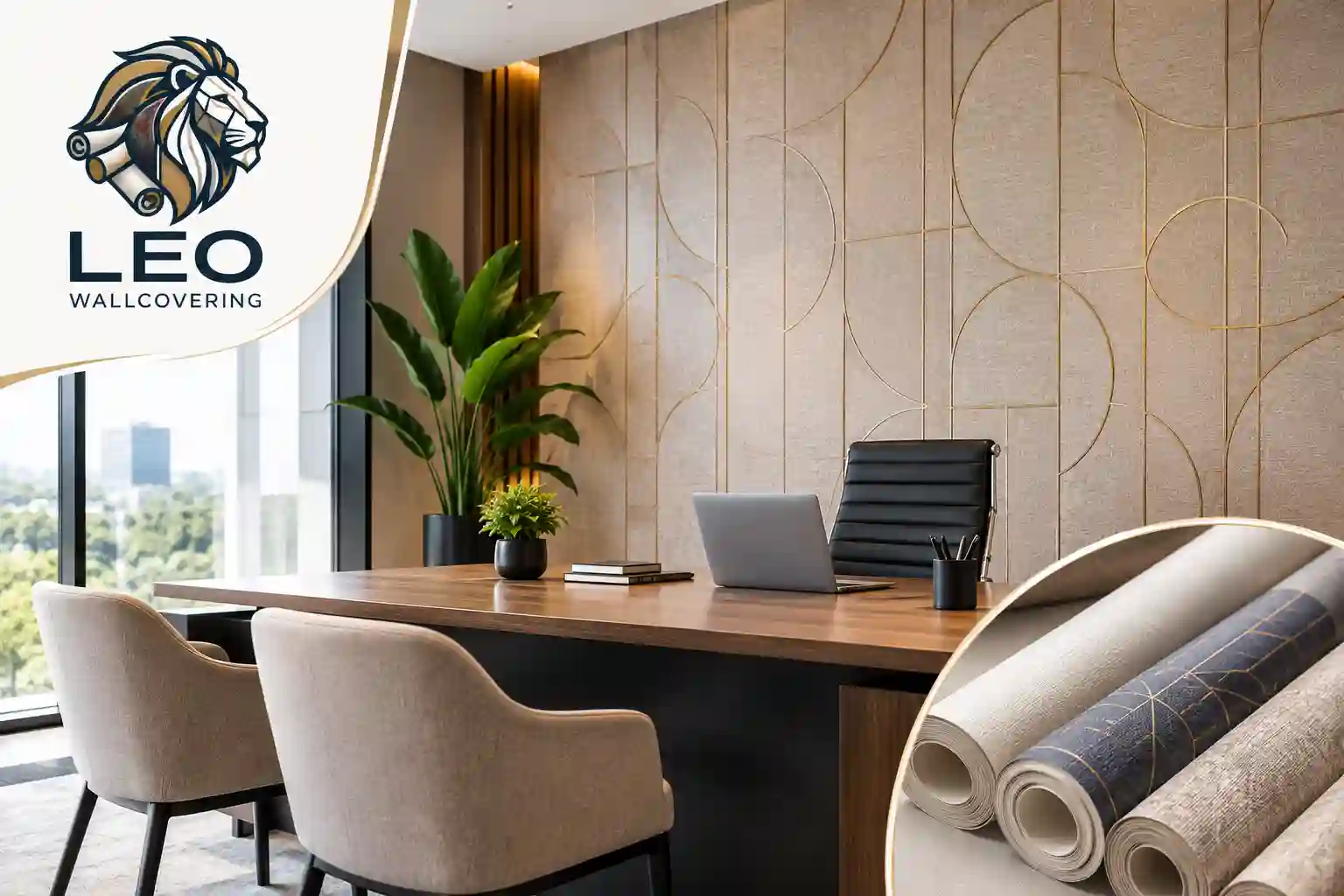
Choosing wallpaper for an office involves more than picking a color or pattern that looks attractive. Commercial walls deal with daily contact, cleaning, changing light, furniture movement, and different levels of foot traffic. The right wallcovering should balance appearance with durability, maintenance, installation requirements, and the purpose of each space.
Whether you’re updating a reception area, conference room, hallway, private office, retail space, or another commercial interior, the wallcovering needs to work with the environment rather than simply look good in a sample book.
This guide explains what commercial wallpaper is, which materials and styles are available, how professional installation works, what problems to avoid, and how to choose a wallcovering that fits an office environment. It is especially useful for business owners, office managers, designers, contractors, and property managers planning an office renovation or interior update.
How Do You Choose Wallpaper for an Office?
The best office wallpaper depends on how the space is used.
For a busy office, reception area, hallway, or shared workspace, durability and cleanability may matter more than a delicate decorative finish. For a conference room or executive office, texture, pattern, branding, and visual character may receive greater attention.
Before purchasing, check the manufacturer’s specifications for the intended commercial application, including durability, cleanability, fire-performance requirements, substrate, adhesive compatibility, and installation instructions. Commercial wallcoverings are designed for environments such as offices, retail spaces, hospitality properties, schools, and healthcare facilities, with different materials offering different performance characteristics.
The final selection should also account for the condition of the walls. Even premium wallpaper can produce disappointing results when applied over an uneven, damaged, dirty, or poorly prepared surface. Proper wall preparation should be considered part of the project rather than an optional step.
What Is Commercial Wallpaper?
Commercial wallpaper is a wallcovering designed or specified for use in business and other commercial environments. Unlike choosing wallpaper solely for residential decoration, commercial projects often require consideration of performance characteristics such as durability, cleanability, fire performance, and suitability for the level of traffic within the building.
The term can cover a broad range of products rather than one specific material. Depending on the project, an office may use vinyl wallcoverings, fabric-backed vinyl, digital wall graphics, synthetic textile finishes, acoustical wallcoverings, metallic designs, natural-looking materials, or writable surfaces.
For example:
- Vinyl wallcoverings can be practical in areas exposed to regular wear and cleaning.
- Fabric-backed vinyl combines a textile substrate with a durable vinyl surface and is widely associated with commercial applications.
- Digital wall graphics can introduce company branding, imagery, or custom artwork.
- Textured wallcoverings can add visual depth without relying on a bold printed pattern.
- Acoustical wallcoverings can be considered in spaces where sound absorption is an important design factor.
- Writable wallcoverings can provide functional surfaces for notes, presentations, planning, and collaboration.
The key point is that commercial wallpaper should be selected according to the demands of the particular space rather than appearance alone.
Why Does Choosing the Right Office Wallpaper Matter?
Office walls are part of the working environment. They influence how a reception area, conference room, hallway, workspace, or customer-facing area looks and functions.
Appearance and Brand Presentation
A well-selected wallcovering can help create a consistent interior design. Colors, textures, patterns, murals, and branded graphics can support the visual identity of a business without requiring every wall to look the same.
A reception area, for example, may benefit from a distinctive accent wall, while corridors may need something more durable and easier to maintain.
If you want to create a focused feature area, an accent wall installation can provide visual interest without covering every wall with a bold design.
Durability in Busy Areas
High-traffic areas experience more contact from employees, customers, deliveries, furniture, and routine cleaning. Commercial wallcovering options are available with different levels of abrasion resistance and cleanability, allowing specifications to be matched to the environment.
A hallway in a busy office may have very different requirements from a private executive office. Thinking about traffic before choosing the material can help prevent problems later.
Easier Maintenance
A wallcovering that suits the cleaning requirements of an office can be more practical than selecting a material based only on its appearance. In healthcare, hospitality, food-service, and high-use settings, maintenance requirements can be particularly important.
Always review the manufacturer’s maintenance recommendations before choosing a product for a high-use commercial space.
A More Finished Interior
Blank walls can sometimes make an office feel unfinished, while an appropriate wallcovering can introduce texture, pattern, color, or branding.
The objective is not necessarily to make every wall visually dramatic. Instead, the goal is to create an interior that works with the business, the furniture, the lighting, and the people using the space.
Types, Materials, Styles, and Applications for Office Wallcoverings
There is no single wallpaper material that works for every office. The best option depends on where it will be installed and what the walls will experience.
Vinyl and Commercial Vinyl Wallcoverings
Vinyl is commonly used for commercial interiors because different vinyl constructions can provide durability, scrubbability, and other performance characteristics. Fabric-backed vinyl is among the commercial wallcovering categories recognized by the Wallcoverings Association.
It can be appropriate for:
- Office corridors
- Reception areas
- Lobbies
- Shared workspaces
- High-use walls
- Retail environments
The exact product should still be selected according to the manufacturer’s specifications and the demands of the space.
Textile and Synthetic Textile Wallcoverings
Textile-inspired wallcoverings can provide a softer, more sophisticated appearance. Synthetic textile products can offer the visual character of natural fabrics while providing additional resistance to stains and abrasion.
They can work well in:
- Executive offices
- Conference rooms
- Reception areas
- Hospitality-inspired offices
- Feature walls
Custom Wall Graphics and Murals
Custom graphics can turn an otherwise ordinary wall into a branding or communication feature. A company may use a logo treatment, photographic image, architectural graphic, branded pattern, or custom artwork.
Leo Wallcovering specifically offers custom wall graphics and wall mural installation as part of its commercial wallcovering solutions.
Custom graphics can be particularly useful in reception areas, conference rooms, customer-facing spaces, and other locations where the company wants the interior to communicate its identity.
Acoustical Wallcoverings
Some commercial wallcoverings are designed with sound absorption in mind. These products can be useful for meeting rooms, offices, theaters, restaurants, corridors, and other environments where controlling reflected sound is an important design consideration.
Acoustical requirements should be evaluated according to the specific space and product specifications.
Writable Wallcoverings
Writable and dry-erase wallcoverings can turn selected wall surfaces into functional workspace areas for notes, presentations, planning, or collaboration.
Rather than adding another piece of furniture to a meeting room or collaborative area, a writable wall surface can make the wall itself part of the workspace.
How Does Professional Commercial Wallpaper Installation Work?
A quality installation begins well before the first strip is placed on the wall. The process should account for the surface, material, pattern, adhesive, layout, and final appearance.
For a more detailed overview, see our guide to the professional wallpaper installation process.
1. Surface Inspection
The installer examines the walls for cracks, holes, dents, uneven areas, old wallcovering, contamination, and other conditions that could affect adhesion or appearance.
Leo Wallcovering’s preparation process includes inspecting walls for cracks, holes, uneven areas, and other imperfections before installation.
2. Wall Preparation
Walls may need cleaning, patching, sanding, smoothing, or other preparation before the wallcovering is applied.
This stage is important because surface imperfections can remain visible through finished wallcovering. Proper preparation also helps create the conditions needed for reliable adhesion.
For more information about preparing a surface before installation, see our wall preparation services.
3. Measurements and Layout Planning
The installer determines the wall dimensions and plans where seams, corners, doors, windows, and design elements will fall.
For patterned wallpaper, layout planning is especially important because the pattern must remain visually consistent across adjoining sections.
4. Material Preparation
The wallcovering is checked, organized, and prepared according to the manufacturer’s installation requirements. Pattern repeats, sequence, adhesive requirements, and installation direction must be considered before application.
5. Adhesive and Application
The appropriate adhesive and application method depend on the wallcovering product. Following the manufacturer’s specifications helps prevent installation problems and protects the material.
6. Pattern Matching and Seam Alignment
Patterned wallcoverings require careful alignment so adjoining sections create a continuous visual design. Seams should be positioned and handled carefully rather than treated as an afterthought.
7. Trimming and Detail Work
Edges around corners, ceilings, baseboards, doors, windows, and other architectural details are trimmed neatly to create a finished appearance.
8. Final Inspection
The completed installation should be checked for alignment, seams, edges, bubbles, wrinkles, adhesion, and overall appearance.
For commercial projects, the installer may also coordinate the work around operating hours to reduce disruption to the business. Leo Wallcovering states that its commercial installation team schedules work around business hours when possible.
Common Commercial Wallpaper Problems and Mistakes
Most installation problems are easier to prevent than to correct afterward.
Poor Wall Preparation
Wallpaper applied over cracks, holes, dirt, loose material, or uneven surfaces may show imperfections or have adhesion problems. Proper preparation creates a more reliable foundation.
Visible or Misaligned Seams
Seams can become noticeable when strips are not aligned correctly, when the pattern is not matched carefully, or when installation conditions are unsuitable.
Bubbles and Wrinkles
Trapped air, improper application, unsuitable wall conditions, or incorrect handling can contribute to bubbles and wrinkles.
Peeling Edges
Edges may lift when the wall is not adequately prepared, the adhesive is unsuitable, or installation instructions are not followed.
Incorrect Material Selection
A beautiful residential product may not be appropriate for a demanding commercial environment. Commercial specifications should be reviewed before ordering rather than assuming every wallpaper product has the same performance characteristics.
Ignoring Lighting
A pattern that looks subtle under showroom lighting can appear considerably different under strong office lighting. Samples should be viewed in the actual space whenever possible.
Ordering Without Confirming Measurements
Insufficient material can create delays, especially when a particular pattern or batch is difficult to replace. Measurements should account for pattern repeat and installation requirements rather than relying only on the basic wall area.
How to Choose the Right Wallpaper for Your Office
A practical selection process starts with the room rather than the wallpaper catalog.
Consider the Room’s Purpose
Ask what happens in the space.
A reception area may need a polished, memorable design. A hallway may require greater durability. A conference room may benefit from texture or acoustic considerations. A collaborative area may be a good location for writable wallcovering.
Evaluate Traffic and Maintenance
Think about how frequently the wall will be touched, cleaned, or exposed to equipment and furniture.
For higher-use environments, look for commercial products whose specifications match the expected level of wear and cleaning.
Match the Design to the Business
Consider how the wallcovering works with:
- Company colors
- Existing furniture
- Flooring
- Lighting
- Architectural details
- Brand identity
- Desired atmosphere
- Pattern scale
- Texture
The wallpaper should complement the interior instead of competing with every other visual element.
Check the Material Specifications
Before ordering, review the manufacturer’s information for:
- Commercial suitability
- Durability
- Cleanability
- Fire-performance requirements
- Adhesive compatibility
- Installation method
- Maintenance instructions
- Environmental or indoor-air requirements where applicable
For projects with formal specifications, architects, designers, contractors, or facility managers may need to verify the product’s documentation rather than relying on the appearance of a sample.
Consider Wall Condition
If the walls have damage or uneven surfaces, preparation may become an important part of the project. A professional assessment can help determine whether the existing surface is ready or requires repair first.
Think About the Entire Installation
The cost and outcome are influenced not only by the wallpaper itself but also by preparation, measurements, pattern matching, labor, wall conditions, and project scheduling.
If you’re planning a budget, our guide to wallpaper installation cost explains some of the factors that can influence the overall project.
Professional Installation vs. DIY: Which Makes Sense?
DIY wallpaper installation can be manageable for a small, straightforward project involving a simple material, a smooth wall, and limited pattern matching.
Commercial projects can become considerably more complicated.
Professional wallpaper installation may be preferable when:
- The project covers a large area.
- Walls require significant preparation.
- The design has a complex pattern repeat.
- Multiple rooms must maintain consistent alignment.
- The material is expensive or difficult to handle.
- The space must remain operational during the project.
- The wallcovering has specific commercial installation requirements.
- The project includes corners, architectural details, or challenging surfaces.
This does not mean every office wallpaper project requires professional labor. The appropriate choice depends on the material, project scale, wall condition, installation complexity, and the experience available.
For businesses, scheduling can also be a practical consideration. Leo Wallcovering describes its commercial process as including site consultation, wall preparation, scheduled installation, and coordination designed to minimize interruption to business operations.
Local Considerations for Commercial Wallpaper Installation
For businesses looking for wallpaper installation in Ontario, CA, as well as projects throughout Orange County, the Inland Empire, and Los Angeles, local project conditions can influence planning, scheduling, and material selection.
A commercial installation may involve an operating office, retail location, restaurant, healthcare facility, hotel, or multi-tenant property. Each environment has different traffic levels, maintenance expectations, and scheduling constraints.
Leo Wallcovering provides commercial wallpaper installation across Ontario, CA, Orange County, Inland Empire, and Los Angeles, with services covering offices, retail spaces, restaurants, hotels, healthcare facilities, and other commercial properties. Its listed solutions include vinyl wallcoverings, custom wall graphics, decorative finishes, wall preparation, and related installation services.
When planning a local project, businesses should also consider:
- Building access and working hours
- Existing wall conditions
- High-traffic areas
- Cleaning requirements
- Material lead times
- Pattern availability
- Coordination with other contractors
- Protection of furniture and equipment
- The amount of business disruption the installation may cause
A site consultation can make these considerations easier to address before materials are ordered.
Frequently Asked Questions
What type of wallpaper is best for an office?
There is no single best option for every office. The appropriate product depends on traffic, cleaning requirements, design goals, wall condition, and the manufacturer’s commercial specifications. Vinyl and fabric-backed vinyl are common commercial categories, while digital graphics, textiles, acoustical products, and writable wallcoverings can serve more specialized purposes.
Can regular residential wallpaper be used in an office?
It may be suitable for some low-use applications, but it should not automatically be treated as equivalent to a commercial wallcovering. Commercial products are available with performance characteristics intended for business environments, so the product specifications should be reviewed before installation.
Does the wall need to be perfectly smooth before wallpaper installation?
The wall does not necessarily have to be flawless, but it needs to be properly prepared for the selected wallcovering. Cracks, holes, uneven areas, dirt, and other imperfections may need to be addressed before installation. Proper preparation helps create a smoother finished appearance and supports adhesion.
How long does commercial wallpaper installation take?
There is no universal installation time. The schedule depends on the size of the project, number of rooms, wall condition, material, pattern complexity, preparation requirements, and access to the property.
For a more detailed look at the factors involved, see our guide on how long wallpaper installation takes.
Can wallpaper be used to display company branding?
Yes. Custom wall graphics and digitally printed wallcoverings can be used to incorporate branding, imagery, patterns, and other custom design elements. They can be particularly useful in reception areas, conference rooms, customer-facing spaces, and feature walls.
How can I prevent wallpaper seams from becoming noticeable?
Start with accurate measurements and careful layout planning, prepare the walls correctly, follow the manufacturer’s installation instructions, and align each strip accurately. Pattern matching and seam placement are particularly important with detailed or repeating designs.
Planning a Commercial Wallpaper Project in Ontario, CA?
Choosing the right commercial wallcovering is only the first step. Wall condition, material specifications, pattern alignment, surface preparation, and installation all affect the finished result.
If you’re planning an office, retail, hospitality, healthcare, or other commercial wallcovering project, Leo Wallcovering can help you plan the installation around your space and project requirements.
Explore our commercial wallpaper installation services or contact Leo Wallcovering to discuss your upcoming project in Ontario, CA and surrounding Inland Empire areas.
Conclusion
Choosing wallpaper for an office is a balance between appearance, performance, maintenance, wall condition, and installation requirements. Start by understanding how each room is used, then compare commercial wallcovering materials according to traffic, cleaning needs, design goals, and manufacturer specifications.
The installation itself matters just as much as the product. Careful surface preparation, accurate measurements, proper material handling, pattern matching, seam alignment, and detailed finishing can significantly affect the final result.
For businesses in Ontario, CA and surrounding areas, choosing an experienced commercial wallcovering installer can make it easier to manage the material, preparation, installation, and scheduling requirements of the project.